Facilities Built for Workflow, Not Debris
Warehouse Cleaning in Acworth for industrial and storage operations where dust, debris, and floor buildup affect safety and organization
Large facilities accumulate dust on high surfaces, debris in traffic lanes, and residue in areas where forklifts and pallet jacks operate continuously. The combination creates slip hazards, obscures floor markings, and contributes to poor air quality as particulate matter circulates through ventilation systems. Innovations Building Maintenance handles warehouse cleaning for industrial and storage facilities in Acworth, addressing both floor-level debris and overhead dust that standard operations don't remove. The work is structured to avoid interrupting workflow, with cleaning scheduled during off-shifts or low-activity periods.
Warehouse cleaning includes sweeping or scrubbing concrete floors to remove oil drips, pallet splinters, and tracked-in soil from loading areas. Dust control targets racking systems, light fixtures, and HVAC vents where particulate settles and eventually falls back into active work zones. Debris removal addresses packaging materials, stretch wrap fragments, and other discarded items that collect in corners or along walls. The service focuses on maintaining baseline cleanliness that supports safe movement and organized inventory management.
Arrange a facility walkthrough to identify cleaning priorities based on your operation's specific layout and material handling patterns.
What Changes After Large-Facility Cleaning
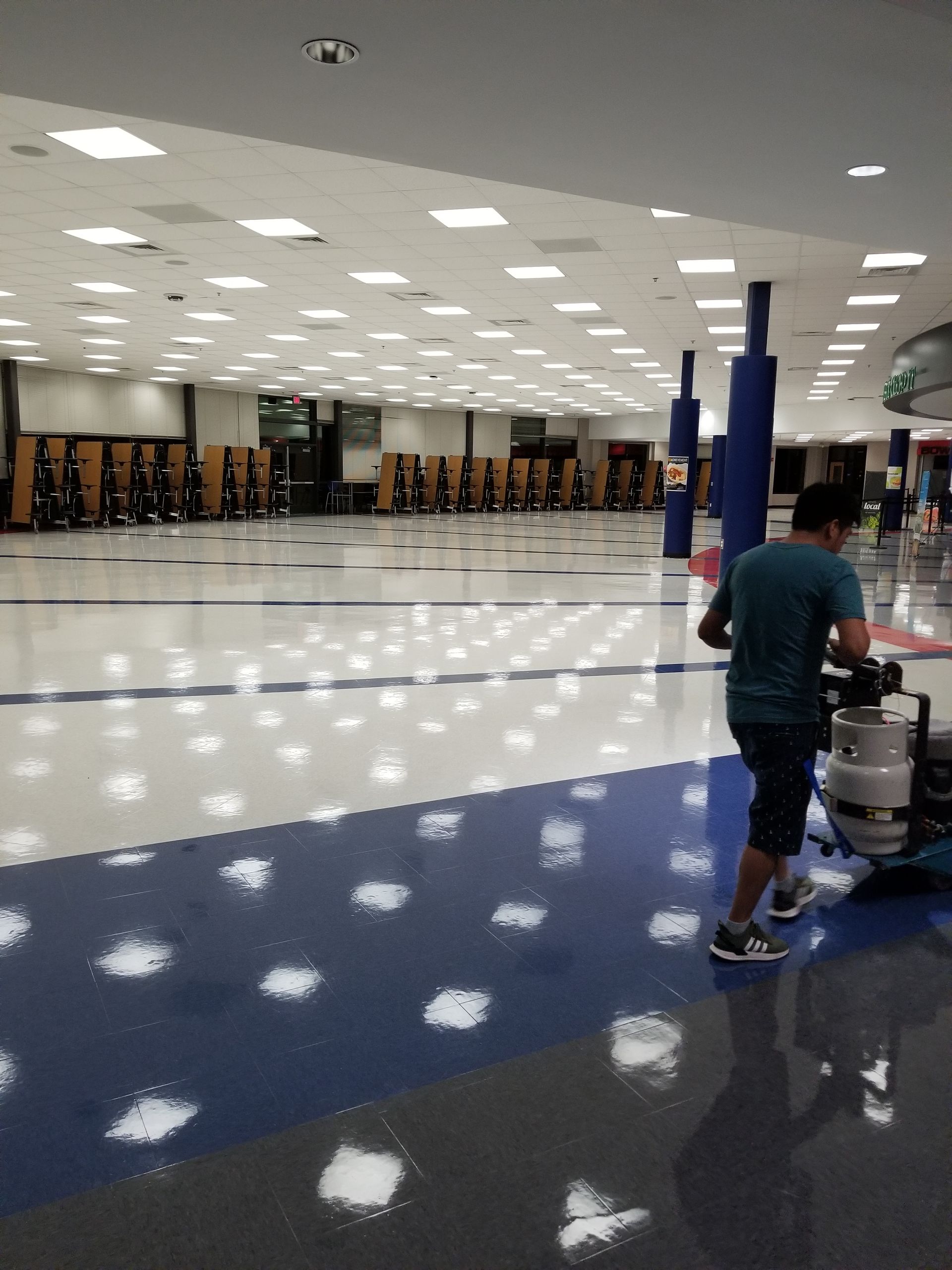
Warehouse cleaning uses industrial equipment suited to large square footage—walk-behind sweepers or scrubbers for floor coverage, high-reach dusting tools for overhead structures, and commercial vacuums for loading dock areas. Floor maintenance may involve degreasing where machinery operates or scrubbing where spills have dried into residue. The approach adjusts based on whether the facility stores dry goods, handles food products requiring sanitation standards, or manages manufacturing processes that generate specific types of waste.
After cleaning, floors show visible lane markings again instead of being obscured by dirt and tire marks. Dust no longer falls from overhead beams onto inventory or equipment when air currents shift. Debris that previously created tripping hazards or damaged forklift wheels is removed from traffic paths. The facility looks more organized because cleaning removes the visual clutter of accumulated waste, making it easier to identify misplaced items or maintenance needs.
Cleaning frequency depends on operational intensity and the type of materials handled. Warehouses with constant truck traffic and outdoor access require more frequent service than climate-controlled storage facilities with limited entry points. Food-grade warehouses follow stricter cleaning protocols to meet regulatory standards, while general storage operations focus on safety and organization. Some facilities schedule deep cleaning quarterly, while high-activity operations maintain weekly or biweekly service to prevent buildup.
Questions Before Starting Your Project
Warehouse managers in Acworth typically need practical information about how commercial cleaning integrates with active operations and what results to expect from the service.
How does warehouse cleaning avoid disrupting workflow?
Service is scheduled during second or third shifts, weekends, or planned downtime when inventory movement slows. Some facilities designate specific zones for cleaning while operations continue in other areas, rotating through sections on a planned schedule.
What floor maintenance works for high-traffic concrete?
Concrete warehouse floors benefit from regular sweeping to remove abrasive debris, periodic scrubbing to lift oil and residue, and optional sealing to make future cleaning easier. Unsealed concrete absorbs spills and becomes progressively harder to clean as stains penetrate the surface.
Why does dust return quickly after cleaning?
Warehouses with open loading docks, high ceilings, and constant air movement will always generate some dust. Regular cleaning prevents accumulation rather than eliminating dust entirely. Facilities in Acworth near construction zones or unpaved areas deal with higher dust levels, especially during Georgia's dry fall months.
What debris removal includes in warehouse settings?
The service addresses discarded packaging, broken pallets, metal banding, and general refuse that accumulates during receiving and shipping operations. Hazardous materials or specialized waste require separate handling and aren't part of standard cleaning.
When should warehouse cleaning increase in frequency?
Boost cleaning before safety inspections, after construction or renovation projects, when preparing for new inventory systems, or when dust complaints increase from staff. Seasonal changes in Acworth, particularly spring pollen season, sometimes require temporary frequency adjustments.
Innovations Building Maintenance develops warehouse cleaning plans that account for your facility's operational schedule, square footage, and specific cleanliness requirements. Discuss your industrial cleaning needs by calling (470) 310-8235 to review service options that minimize operational impact.